
Turnkey Solutions
Waste A–Z
Sectors
Project development
Engineering & Delivery
Operations & Lifecycle
Commercial & Investment Models
Warp Gasification
team@univastum.com
Knowledge Base
Chief Technology Officer
Peter Kalenuk
Industrial Waste-to-Steam
Integrated Waste-to-Steam facility for industrial client
Spain
Municipal Waste-to-Electricity
Modular Waste-to-Energy facility for municipal solid waste
Romania
investors@univastum.com
Chief Investment Officer
Eben Klynsmith
Our Approach
Work With Us
Insights & News
Press Kit
mt@univastum.com
Chief Marketing & Communications Officer
Matthew Tucker
About Univastum
Leadership & Governance
Careers
Sustainability
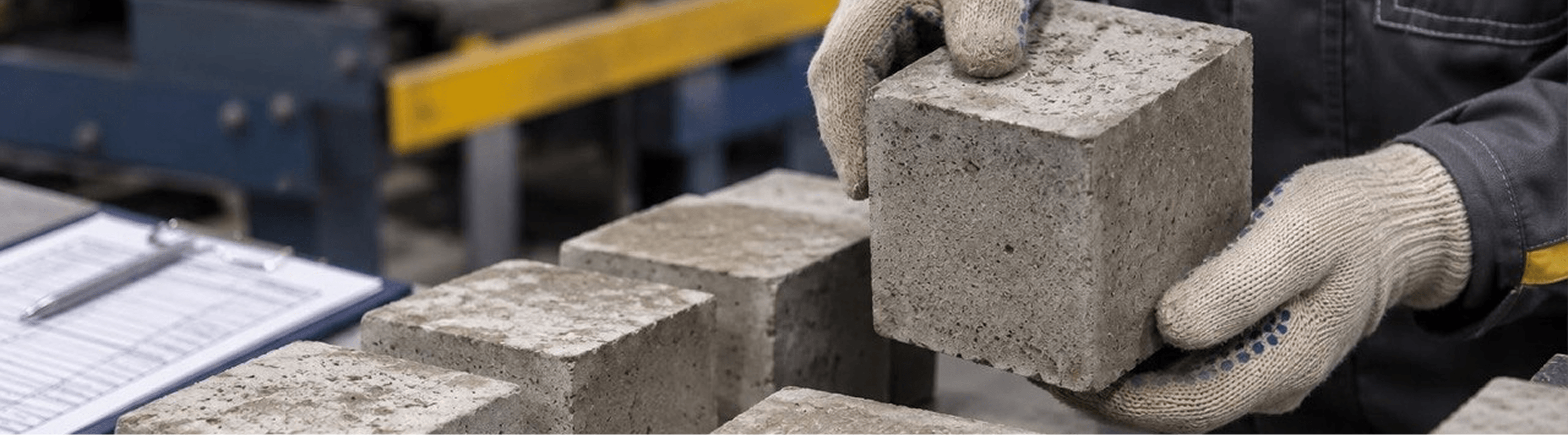
From Ash to Construction Materials: Utilisation of Mineral Residues from RDF Gasification
Technical assessment of mineral residue utilisation pathways for WARP gasification, using RDF as a reference feedstock
Peter Kalenuk, PhD
Peter Kalenuk, PhD
Why Mineral Residues Matter
Waste-to-Energy projects are assessed in terms of electricity, steam and industrial fuel production. However, the material outputs of the process also have practical value. Following conversion of the combustible fraction of prepared waste into syngas, the inorganic fraction forms a solid mineral residue. In Univastum projects, this stream is treated as a secondary mineral resource and directed towards specific civil engineering and construction applications.
This article examines the characteristics and established applications of mineral residues from WARP gasification, including road construction, waste-management infrastructure and the manufacture of construction products. Refuse-derived fuel (RDF) serves as an example; the approach also applies to other prepared feedstocks, including municipal solid waste (MSW) fractions. The range of applications is determined by feedstock composition, fuel preparation, material test results and local requirements.
This article examines the characteristics and established applications of mineral residues from WARP gasification, including road construction, waste-management infrastructure and the manufacture of construction products. Refuse-derived fuel (RDF) serves as an example; the approach also applies to other prepared feedstocks, including municipal solid waste (MSW) fractions. The range of applications is determined by feedstock composition, fuel preparation, material test results and local requirements.
Composition and Properties of WARP Gasification Mineral Residues
When processing prepared fuel, WARP gasification achieves a high degree of carbon conversion. For the operating conditions considered, residual carbon in the mineral residue is below 1% by mass on a dry basis (Univastum calculated operating parameter). Residual carbon is not equivalent to loss on ignition (LOI), which may also include carbonate decomposition and the release of chemically bound water. The low carbon fraction improves the suitability of the material as a mineral filler, while chemical and environmental assessment remains a separate consideration.
Earlier investigations of RDF mineral residues identified calcium-, silicon-, aluminium-, iron- and magnesium-bearing compounds as the predominant constituents. These reflect the typical composition of the mineral fraction of prepared mixed waste and vary with the incoming fuel and gasification conditions.
Earlier investigations of RDF mineral residues identified calcium-, silicon-, aluminium-, iron- and magnesium-bearing compounds as the predominant constituents. These reflect the typical composition of the mineral fraction of prepared mixed waste and vary with the incoming fuel and gasification conditions.
Note. These ranges are indicative and are not measurements from a specific XRF/XRD test report. Their extreme values do not correspond to a single sample and must not be added together. Chloride content is reported separately from the oxide composition.
To suppress dust, the mineral residue is moistened to approximately 30% moisture by wet mass after discharge. This operation reduces dust generation during transport and storage. One tonne of this material contains approximately 0.70 t of dry mineral solids and 0.30 t of water. Mix design, transport loading and storage calculations therefore distinguish between wet and dry masses; moisture addition alone does not constitute chemical stabilisation or replace leaching control.
According to Univastum data, mineral residues obtained from properly prepared RDF and MSW, particularly after the removal of hazardous and undesirable constituents, are classified as Hazard Class IV under the classification system applicable to the respective facilities. This classification applies to the examined material batches rather than all conceivable waste streams; for each project, the classification is documented through the relevant analyses and records. Hazard Class IV does not constitute an automatic authorisation for unrestricted use in construction products or embankments. The residue also contains soluble salts and trace amounts of Zn, Cu, Pb, Cr and Ni; their mobility depends on leaching behaviour and conditions of use [1, 2].
Published studies of residues from high-temperature RDF gasification document variations in metal leaching between facilities and material fractions [2]. Accordingly, project sites apply incoming-fuel sorting and quality control, representative residue-batch analysis and assessment of the intended application.
According to Univastum data, mineral residues obtained from properly prepared RDF and MSW, particularly after the removal of hazardous and undesirable constituents, are classified as Hazard Class IV under the classification system applicable to the respective facilities. This classification applies to the examined material batches rather than all conceivable waste streams; for each project, the classification is documented through the relevant analyses and records. Hazard Class IV does not constitute an automatic authorisation for unrestricted use in construction products or embankments. The residue also contains soluble salts and trace amounts of Zn, Cu, Pb, Cr and Ni; their mobility depends on leaching behaviour and conditions of use [1, 2].
Published studies of residues from high-temperature RDF gasification document variations in metal leaching between facilities and material fractions [2]. Accordingly, project sites apply incoming-fuel sorting and quality control, representative residue-batch analysis and assessment of the intended application.
Application 1: Aggregates, Roads and Landfill Infrastructure
Prepared mineral residue is used in selected layers of service roads, internal operating areas, engineered fills and works within waste-management infrastructure where the required material properties have been demonstrated and the application is permitted. Key performance characteristics include particle-size distribution, compactability, bearing capacity, water resistance and controlled placement conditions.
Use of mineral residues in road and civil engineering works has been demonstrated in earlier projects undertaken by the Univastum team and is also reflected in international bottom-ash management practice. In Europe, processed bottom-ash materials are used as aggregates in road construction and earthworks under national requirements. A 2024 study assessed strength, water resistance and leaching in cement-stabilised material containing bottom ash [3]. Processing includes size separation, metal removal, ageing and, where appropriate, washing [4]. Evidence concerning incineration bottom ash is used here as an analogue, not as direct test evidence for WARP gasification residue.
At waste-management facilities, qualified material is used for internal access roads, working platforms and designated engineered layers. Its application is linked to a defined geotechnical function and to groundwater protection, drainage and leachate-management arrangements. Engineered fill does not mean uncontrolled placement: the project defines material specifications, placement boundaries, quality control and permitting documentation.
Use of mineral residues in road and civil engineering works has been demonstrated in earlier projects undertaken by the Univastum team and is also reflected in international bottom-ash management practice. In Europe, processed bottom-ash materials are used as aggregates in road construction and earthworks under national requirements. A 2024 study assessed strength, water resistance and leaching in cement-stabilised material containing bottom ash [3]. Processing includes size separation, metal removal, ageing and, where appropriate, washing [4]. Evidence concerning incineration bottom ash is used here as an analogue, not as direct test evidence for WARP gasification residue.
At waste-management facilities, qualified material is used for internal access roads, working platforms and designated engineered layers. Its application is linked to a defined geotechnical function and to groundwater protection, drainage and leachate-management arrangements. Engineered fill does not mean uncontrolled placement: the project defines material specifications, placement boundaries, quality control and permitting documentation.
Application 2: Concrete Products and Paving Blocks
To produce higher-value materials, prepared mineral residue is incorporated into concrete mixes for paving blocks, kerbs and non-structural precast elements following mix design and performance testing. Project configurations include the option of locating a small paving-block production line directly at the Waste-to-Energy facility. This reduces transportation and provides locally manufactured products for roads, pedestrian areas and the site infrastructure.
Mix preparation includes particle-size separation, removal of metals and unwanted constituents, soluble-salt control and moisture adjustment. Depending on mineralogy and particle size, the ash functions as a partial fine aggregate replacement or mineral filler; its use as a supplementary binder is established separately.
A German study published in 2025 incorporated treated fractions of municipal solid waste incineration bottom ash into concrete paving blocks [5]. A systematic review likewise shows that concrete product performance depends on replacement level and ash-processing methods [6]. In Univastum projects, mix selection and product quality control form part of the FEED engineering programme. Published evidence and Univastum experience demonstrate the practical viability of this pathway without being treated as substitutes for testing the specific WARP gasification mineral residue.
On-site mix assessment includes tests for strength, water absorption, abrasion resistance, freeze–thaw resistance, de-icing salt resistance and dimensional stability. Release of contaminants is also assessed using the applicable methods. Once the required properties have been demonstrated, serial production is organised with batch traceability and a defined end-use market.
Mix preparation includes particle-size separation, removal of metals and unwanted constituents, soluble-salt control and moisture adjustment. Depending on mineralogy and particle size, the ash functions as a partial fine aggregate replacement or mineral filler; its use as a supplementary binder is established separately.
A German study published in 2025 incorporated treated fractions of municipal solid waste incineration bottom ash into concrete paving blocks [5]. A systematic review likewise shows that concrete product performance depends on replacement level and ash-processing methods [6]. In Univastum projects, mix selection and product quality control form part of the FEED engineering programme. Published evidence and Univastum experience demonstrate the practical viability of this pathway without being treated as substitutes for testing the specific WARP gasification mineral residue.
On-site mix assessment includes tests for strength, water absorption, abrasion resistance, freeze–thaw resistance, de-icing salt resistance and dimensional stability. Release of contaminants is also assessed using the applicable methods. Once the required properties have been demonstrated, serial production is organised with batch traceability and a defined end-use market.
Application 3: Mineral-Rich Mixtures for Construction 3D Printing
One of Univastum’s ongoing R&D areas investigates the use of processed WARP gasification mineral residue as the principal mineral constituent of extrusion-based construction 3D-printing mixtures. The research examines whether selected fractions provide dense particle packing, the required rheological response and, where supported by their chemical composition, a contribution to cementitious or alkali-activated matrix formation. “Principal constituent” describes a research hypothesis rather than an already certified commercial formulation.
The scientific basis and experiments conducted to date are encouraging. Experimental studies have used municipal waste incineration bottom ash as a partial replacement for aggregates or binder constituents in printable cementitious materials [7]. A 2023 study examined replacement of up to 60% of aggregate by volume in engineered cementitious composites for 3D printing, identifying trade-offs between printability, strength and porosity [8]. In 2025, researchers also presented a geopolymer-printing approach with high contents of bottom ash and blast-furnace slag [9].
The research programme evaluates drying and grinding, particle-size distribution, rheology, pumpability, extrusion pressure, mixture open time, interlayer bonding, buildability, shrinkage, early strength, durability and leaching from hardened specimens. When the incoming residue has approximately 30% moisture, the water it contains is included in the effective water-to-binder ratio.
The scientific basis and experiments conducted to date are encouraging. Experimental studies have used municipal waste incineration bottom ash as a partial replacement for aggregates or binder constituents in printable cementitious materials [7]. A 2023 study examined replacement of up to 60% of aggregate by volume in engineered cementitious composites for 3D printing, identifying trade-offs between printability, strength and porosity [8]. In 2025, researchers also presented a geopolymer-printing approach with high contents of bottom ash and blast-furnace slag [9].
The research programme evaluates drying and grinding, particle-size distribution, rheology, pumpability, extrusion pressure, mixture open time, interlayer bonding, buildability, shrinkage, early strength, durability and leaching from hardened specimens. When the incoming residue has approximately 30% moisture, the water it contains is included in the effective water-to-binder ratio.
From Residue to Product: Control and Verification
Univastum projects apply a staged assessment of mineral residues. Representative sampling covers different RDF and MSW compositions and operating conditions. Physicochemical analysis determines moisture, particle-size distribution, density, mineralogy, residual carbon, soluble salts, pH and regulated element concentrations. Leaching and durability tests characterise environmental and engineering performance. Pilot-scale production trials confirm quality reproducibility; the required investigations and product specifications are documented during FEED.
Within the European Union, the regulatory distinction between waste and a product is established, among other provisions, by Article 6 of the Waste Framework Directive (end-of-waste) [10]. Product placement on the market involves demonstrating technical suitability, market demand, compliance with standards and protection of human health and the environment. The “Hazard Class IV” designation used in certain national systems does not replace EU legal requirements. The required tests, including leaching tests (for example, the EN 12457 series where applicable), are conducted and the necessary permits are obtained for the specified use.
Circular Industrial Facilities: Products Instead of Uncontrolled Residues
In an integrated Waste-to-Energy model, the facility produces steam, electricity or syngas from the combustible feedstock fraction, while the prepared mineral residue is directed towards road construction, civil infrastructure and construction-product manufacturing. A small on-site paving-block production unit converts part of the mineral stream into finished products for internal roads and the local market. Material recovery thereby becomes part of the production process rather than a subsequent residue-disposal operation.
The principle that “products, rather than waste, leave the facility” is implemented for material fractions with established composition, environmental properties, formulations and defined end-use markets. Fractions that do not meet the applicable criteria undergo the treatment or disposal specified in the relevant permits. This approach avoids presenting the entire mineral residue stream as marketable product without supporting evidence.
The principle that “products, rather than waste, leave the facility” is implemented for material fractions with established composition, environmental properties, formulations and defined end-use markets. Fractions that do not meet the applicable criteria undergo the treatment or disposal specified in the relevant permits. This approach avoids presenting the entire mineral residue stream as marketable product without supporting evidence.
Conclusion
RDF is examined as an example of prepared fuel for WARP gasification; the same approach is applied to qualified MSW fractions. Under the selected operating basis, residual carbon is below 1% of dry mass, while moisture during handling is maintained at approximately 30%. The mineral composition is dominated by Ca-, Si-, Al-, Fe- and Mg-bearing compounds. According to Univastum, residues produced from properly prepared mixed fuel have been assigned Hazard Class IV in the applicable classification system; acceptance for specific construction uses is established separately.
Prepared material is used in controlled civil engineering applications and is incorporated into the assessment of concrete products. An on-site paving-block production line adds a material product to the project’s output, while research into construction 3D-printing mixtures provides a further development pathway. In this way, WARP gasification combines energy recovery from prepared waste with the recovery of useful mineral resources in accordance with applicable requirements.
Prepared material is used in controlled civil engineering applications and is incorporated into the assessment of concrete products. An on-site paving-block production line adds a material product to the project’s output, while research into construction 3D-printing mixtures provides a further development pathway. In this way, WARP gasification combines energy recovery from prepared waste with the recovery of useful mineral resources in accordance with applicable requirements.
References
[1] Rocca, S. et al. (2012). Characterisation of major component leaching and buffering capacity of RDF incineration and gasification bottom ash. Waste Management. DOI: 10.1016/j.wasman.2011.11.018.
[2] Gori, M., Pifferi, L., Sirini, P. (2011). Leaching behaviour of bottom ash from RDF high-temperature gasification plants. Waste Management 31, 1514–1521. DOI: 10.1016/j.wasman.2011.03.009.
[3] Research on using municipal solid waste incineration bottom ash for cement-stabilized macadam. Construction and Building Materials 425 (2024), 135850. DOI: 10.1016/j.conbuildmat.2024.135850.
[4] European Commission. Commission Implementing Decision (EU) 2019/2010, BAT conclusions for waste incineration (bottom-ash treatment techniques). EUR-Lex: https://eur-lex.europa.eu/legal-content/EN/TXT/?uri=CELEX:32019D2010.
[5] Treatment of fine and medium fractions of MSWI bottom ash for use in concrete: A German case study. Waste Management (2025). PubMed PMID: 40037012.
[6] Sivayogaraj, A.S., Elavenil, S. (2025). Municipal solid waste incineration bottom ash in concrete: A systematic review and meta-analysis. Scientific Reports. https://www.nature.com/articles/s41598-025-23774-6.
[7] Rehman, A.U., Lee, S.-M., Kim, J.-H. (2020). Use of municipal solid waste incineration ash in 3D printable concrete. Process Safety and Environmental Protection 142, 219–228. DOI: 10.1016/j.psep.2020.06.018.
[8] Ye, J. et al. (2023). Development of 3D printable engineered cementitious composites with incineration bottom ash. Journal of Cleaner Production 422, 138639. DOI: 10.1016/j.jclepro.2023.138639.
[9] Shah, S.F.A. et al. (2025). Development of a novel mixing strategy for set-on-demand printing of one-part geopolymer using MSWI bottom ash and blast furnace slag. Journal of Building Engineering 106, 112632. DOI: 10.1016/j.jobe.2025.112632.
[10] European Parliament and Council. Directive 2008/98/EC on waste, Article 6 (end-of-waste). [Available here]
[2] Gori, M., Pifferi, L., Sirini, P. (2011). Leaching behaviour of bottom ash from RDF high-temperature gasification plants. Waste Management 31, 1514–1521. DOI: 10.1016/j.wasman.2011.03.009.
[3] Research on using municipal solid waste incineration bottom ash for cement-stabilized macadam. Construction and Building Materials 425 (2024), 135850. DOI: 10.1016/j.conbuildmat.2024.135850.
[4] European Commission. Commission Implementing Decision (EU) 2019/2010, BAT conclusions for waste incineration (bottom-ash treatment techniques). EUR-Lex: https://eur-lex.europa.eu/legal-content/EN/TXT/?uri=CELEX:32019D2010.
[5] Treatment of fine and medium fractions of MSWI bottom ash for use in concrete: A German case study. Waste Management (2025). PubMed PMID: 40037012.
[6] Sivayogaraj, A.S., Elavenil, S. (2025). Municipal solid waste incineration bottom ash in concrete: A systematic review and meta-analysis. Scientific Reports. https://www.nature.com/articles/s41598-025-23774-6.
[7] Rehman, A.U., Lee, S.-M., Kim, J.-H. (2020). Use of municipal solid waste incineration ash in 3D printable concrete. Process Safety and Environmental Protection 142, 219–228. DOI: 10.1016/j.psep.2020.06.018.
[8] Ye, J. et al. (2023). Development of 3D printable engineered cementitious composites with incineration bottom ash. Journal of Cleaner Production 422, 138639. DOI: 10.1016/j.jclepro.2023.138639.
[9] Shah, S.F.A. et al. (2025). Development of a novel mixing strategy for set-on-demand printing of one-part geopolymer using MSWI bottom ash and blast furnace slag. Journal of Building Engineering 106, 112632. DOI: 10.1016/j.jobe.2025.112632.
[10] European Parliament and Council. Directive 2008/98/EC on waste, Article 6 (end-of-waste). [Available here]